GYOKURO
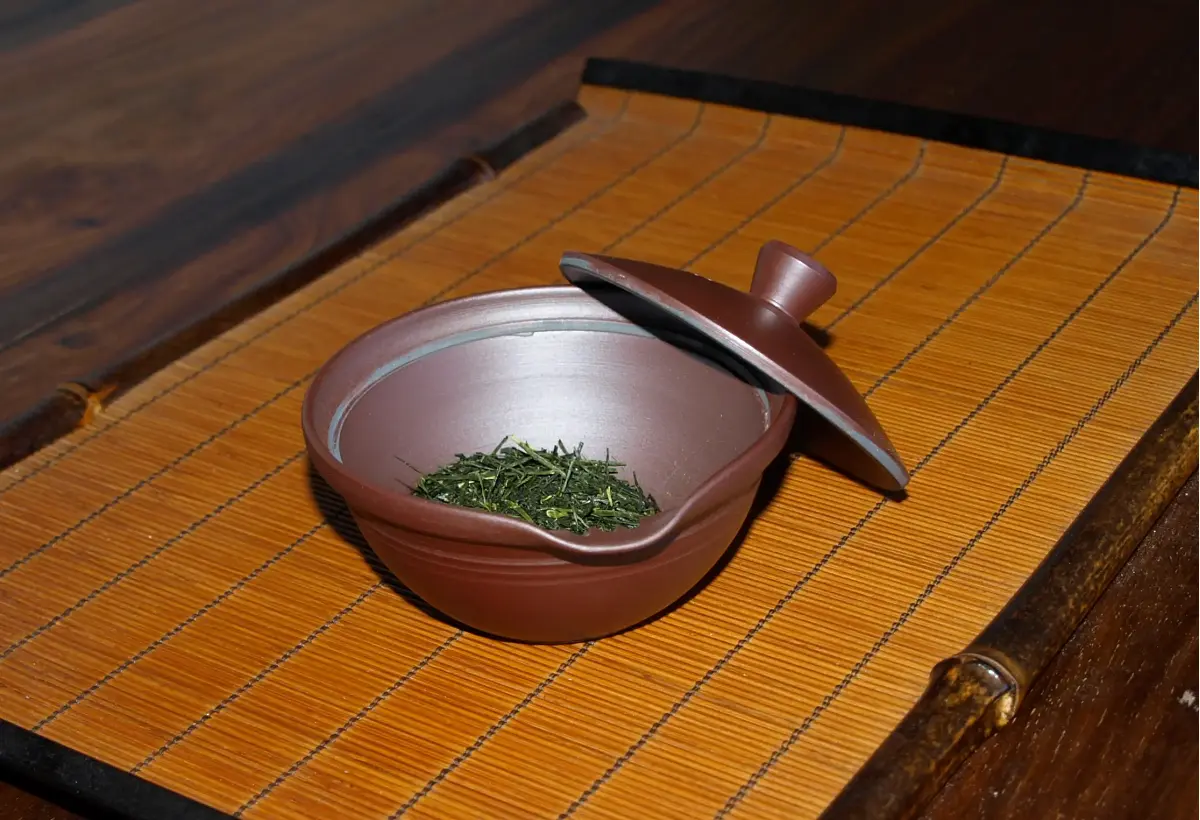
GYOKURO – SHADED JAPANESE GREEN TEA
Gyokuro is one of the most exclusive forms of Japanese tea. It is not a type of Sencha but its own category, distinguished both by flavour and by how it is produced.
Our Gyokuro teas come from the Uji region in Kyoto – one of Japan’s most famous areas for the production of Japanese green tea, and in particular Gyokuro and Matcha. The first documented tea cultivation in Japan took place in the mountains around Kyoto, but it was in Uji that the growing of high-quality tea was developed and refined, especially for Matcha and Gyokuro. Gyokuro is shaded for about 20 days before harvest. The shading contributes to a much sweeter flavour through the amino acid theanine. Our Uji teas are traditionally produced. Traditional Gyokuro production in Uji includes mixing fresh tea with aged tea, Kuradashi. The ageing tones down the sharper notes of the tea and brings out the umami.
- Sencha: can be unshaded or lightly shaded, with greater variation in style – from fresh and grassy to more umami-rich versions.
- Kabuse: partially shaded tea that sits flavour-wise between Sencha and Gyokuro.
- Gyokuro: shaded for three weeks, with emphasis on umami, sweetness and concentration.
WHAT DEFINES A GYOKURO TEA?
- First harvest (ichibancha): Gyokuro is in practice made almost exclusively from the spring first flush.
- Long shading: the bushes are covered for three weeks before harvest, with 80–90 % reduced light.
- Specialised cultivars: Gyokuro is often made from cultivars suited to the style, such as Gokō, Komakage, Samidori, and others.
- Steaming and rolling: the tea is steamed and rolled like other Japanese teas.
- High theanine content: shading increases the theanine level, giving deep umami and sweetness.
UJI AND CULTIVARS – OUR GYOKURO
Uji, just outside Kyoto, is a historical centre for Japanese shaded tea. Here, cultivation methods for Gyokuro and Tencha (the raw material for Matcha) have been developed over a long time, with a focus on shading, careful picking and subsequent ageing.
Our Gyokuro teas come from the Uji region and are based on classic cultivars such as:
- Gokō: a cultivar strongly associated with Uji. It gives deep umami, sweetness and a dense aroma.
- Komakage: often used in blends to round out the flavour and add balance.
- Samidori: common in Uji for both Gyokuro and Matcha, with soft sweetness and a fine colour.
- Yabukita: Japan’s most common cultivar, sometimes used in blends for structure and freshness.
The combination of region (Uji), cultivar and shading gives the teas their distinct signature: dark green leaves, a dense liquor and a long sweet aftertaste.
AGEING AND RIPENING – KURADASHI
In Uji, aged tea is traditionally used as part of production. The tea is stored cool (often refrigerated) after production and kept airtight.
The effect of ageing:
- tones down the sharpest vegetal notes
- rounds out the flavour and enhances the impression of sweetness and umami
- gives a slightly deeper, more integrated aroma
This is not long-term ageing in the same way as Pu-erh or dark oolong, but rather months (sometimes longer) of controlled maturation by the producer. At home, the same principles apply as for other fine Japanese teas: cool, dark, tightly sealed – and not kept open at room temperature for too long.
BREWING GYOKURO – MODERN AND TRADITIONAL STYLE
Gyokuro can be brewed in several ways. A distinction is often made between a more “modern/everyday” style and a more traditional, concentrated style where the umami is driven to its peak.
Modern brewing
This style is close to the recommendations we give on the product pages and works well in a small teapot (for example a kyusu):
- Dosage: about 6 g tea to 2 dl water (or 12 g to 4 dl).
- Temperature: around 60 °C.
- Time: about 1.5 minutes for the first infusion.
The second infusion can be made at the same temperature with about 20 seconds steeping time. The third infusion can be slightly hotter and poured off immediately. This method gives a full but still fairly drinkable cup that also works well for someone new to Gyokuro.
Traditional Gyokuro brewing
Traditional Gyokuro brewing in Japan is often done with:
- A lot of tea in relation to the water – for example 10 - 20 g to only 2 dl water.
- Low temperature – between 50–60 °C. (older brewing techniques use between 40 - 55 °C). Temperature makes a big difference and affects steeping time.
- Relatively long steeping – around 2 minutes for the first infusion, 60 seconds for the second.
The result is: thick texture, lots of umami, clear sweetness and a slightly oily mouthfeel. Later infusions are often made somewhat hotter and with much shorter steeping times (just a few seconds). If the tea is bitter, the balance between amount, temperature and steeping time is not right – premium Gyokuro should not be bitter.
This way of preparing the tea lets you extract the maximum concentration from the leaves – while small variations in temperature and time are very noticeable.
OUR GYOKURO TEAS FROM UJI
In our assortment you will find several Gyokuro teas from the Uji region, with different cultivars and profiles:
-
Gyokuro Fuuki 50 g
Hand-picked Gyokuro made from Gokō and Komakage cultivars. Full-bodied, well-balanced sweetness with deep umami. -
Gyokuro Kame No Yowai 50 g
Exclusive Gyokuro made from the Gokō cultivar from Tanabe and Shirakawa in Uji. Strong, concentrated and sweet profile. -
Gyokuro Matsu no Midori 50 g
Gyokuro from Uji produced from Gokō, Yabukita and Samidori. Characteristic sweet flavour and a strong, dark-green liquor.
All of them are shaded and produced according to traditional methods in the Uji area and can be brewed both in a modern and a more traditional style depending on the experience you are looking for.
For more background on Japanese tea in general, see also:
Japanese tea – history, regions and types »